"When we had been in New York for a week and, as it seemed to us, we began to understand America, we were quite unexpectedly told that New York is not at all America. They told us that New York is a bridge between Europe and America, and that we were still situated on the bridge. Then we went to Washington, being steadfastly convinced that the capital of the United States is indisputably America. We spent a day there, and by evening we managed to fall in love with this purely American city. However, on that very same evening we were told that Washington was under no circumstances America. They told us that this was a town of governmental bureaucrats and that America was something quite different. Perplexed, we traveled to Hartford, a city in the state of Connecticut, where the great American writer Mark Twain spent his mature years. Much to our horror, the local residents told us in unison that Hartford was also not genuine America. They said that the genuine America was the southern states, while others affirmed that it was the western ones. Several didn't say anything but vaguely pointed a finger into space. We then decided to work according to a plan: to drive around the entire country in an automobile, to traverse it from the Atlantic Ocean to the Pacific and to return along a different route, along the Gulf of Mexico, calculating that indeed somewhere we would be sure to find America....
"This picture should be captioned as follows: 'Here, this is America!'
"And, indeed, when you close your eyes and try to rekindle memories of this country where you spent four months, you don't imagine yourself in Washington with its gardens, columns, and full collection of monuments, nor in New York with its skyscrapers and its poor and rich, nor in San Francisco with its steep streets and suspension bridges, nor in the mountains, factories, or canyons, but at such an intersection of two roads and a gasoline station against a ground of wires and advertising signs."
--Ilya Ilf and Yevgeni Petrov, Odnoetazhnaya Amerika, 1937, translated by Erica Wolf
Showing posts with label Washington DC. Show all posts
Saturday, September 18, 2010
Monday, November 30, 2009
Young Mongolian American Professionals
“To unite Mongolian-American active professionals across the United States and Mongolia by providing development and information sharing opportunities to create positive change to the community.”
Monday, November 27, 2006
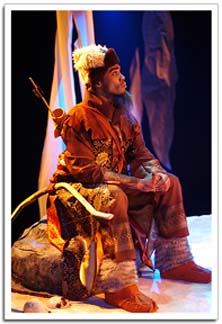
A Genghis Khan Opera in Austin, Texas

A production at the Salvage Vanguard Theater that opened last spring:
"So today I got the coolest email and I’m just going to paste it below. Graham and I talked about this quite a bit last year when we were writing the opera Genghis Khan. Check this out…
"Mr. Neulander
"My name is Dawadash and I am the Second Secretary of the Embassy of Mongolia in Washington DC. I came across to SVT website and the Genghis Khan Opera blog while surfing the net. We congratulate you on the production of Genghis Khan, who is national symbol and hero for my country. The Embassy of Mongolia regrets that we did miss the chance to watch the show, which was a success in Austin. This year Mongolia celebrates the 800th anniversary of the Great Mongolian State created by Genghis Khan in 1206. That year Temuchin was proclaimed Genghis Khan, the ruler of the first unified Mongolian state. We are eager to learn if the Genghis Khan production is still on stage and where and when we can watch it. Have you thought of putting it in other countries, for example in Mongolia. This would great.
Anyways, congratulations on the production and hope to hear from you.
Any questions are welcome at the address below.
Cheers,
"Dawadash Sambuu
Second Secretary
Embassy of Mongolia"
Salvage Vanguard Theater blog
Salvage Vanguard Theater - Genghis Khan: The Opera
Friday, November 18, 2005
"...stop itinerant cows or sheep..."
FROM THE NORTH AMERICA-MONGOLIA BUSINESS COUNCIL (NAMBC)
November 17, 2005
RE: President Bush and Secretary of State Condoleeza Rice to visit Mongolia November 21
Dear Friends,
President Bush's visit to Mongolia next week caps two years of unprecedented high-level visits by senior US officials and a year that has seen a record number of special conferences devoted to Mongolia in the US.
In January 2005, General Richard B. Myers, chairman of the US Joint Chiefs of Staff, visited Ulaanbaatar, followed four weeks later by the visit of Richard Armitage, US Deputy Secretary of State. This past summer, US House Speaker Dennis Hastert (R-IL) led a high-ranking Congressional Delegation to Mongolia, followed by a smaller Congressional delegation headed by Congressman Jim Leach (R-IO), chairman of the Asia and Pacific Subcommittee of the House International Relations Committee. [When Leach was in the US Foreign Service as a young man, he was one of the few officers assigned to Mongolian language training.]
Last month, Defense Secretary Donald Rumsfeld visited Ulaanbaatar (and received a horse that he named "Montana"), during which he committed $17 million for additional training of the Mongolian military for UN peace-keeping operations (PKO). We are grateful to US Ambassador Pam Slutz for her unrelenting advocacy and facilitation of these high-ranking visits.
Mongolian Ambassador to the US Ravdan Bold was the driving force and "invisible hand" behind three important and high-profile conferences devoted to Mongolia this year. The first was in Washington last February at the Heritage Foundation, co-sponsored by the Asia Foundation and Georgia Tech; the second last month, also in Washington, sponsored by the Asia Society, featured lectures by every former US ambassador to Mongolia plus Ambassador Pam Slutz; the third was held last week in Honolulu, on Northeast Asia and Mongolia, co-sponsored by the Asia-Pacific Center for Security Studies, the School of Hawaiian, Asian and Pacific Studies, the East-West Center and the Mongolian Academy of Management. Ambassador Bold will be in UB for President Bush's visit.
Adding to this new visibility are the growth in the number of English-language websites devoted to coverage of Mongolia. One of the best is _www.mongolianartist.com_ (http://www.mongolianartist.com/), which covers a lot more territory than its site name suggests.
PRESIDENT BUSH TO SPEND A CROWDED FIVE HOURS IN UB -- The President will spend only about five hours in Mongolia on November 21, arriving in the morning from Beijing on Air Force One (a specially configured Boeing 747 jet) and departing in the afternoon for a re-fueling stop at Elmsdorf Air Force Base in Alaska en route home to Crawford, TX, for Thanksgiving. Because of the length of the runways at UB, Air Force One can only land with gas tanks half full.
The President is traveling with an entourage of about 500 people, including Secretary of State Condoleeza Rice and other officials, White House and NSC staff, Secret Service and the entire press corps that will have accompanied the President on his visits to Kyoto, Pusan and Beijing before arriving inUB.
[This is not unusually large for a Presidential party, especially since the trip includes the APEC Summit as well as working visits to Japan, Korea and China. When Secretary of State Madeleine Albright visited UB in 1998, her party numbered around 250 people.]
The White House characterizes this trip as a "working visit," not a "State Visit." The Administration said that Bush was coming to Mongolia at the invitation of President N.Enkhbayer, who himself first met with President Bush in the fall of 2001 as Prime Minister, soon after Mongolia became the first Asian country to offer support to the US following the terrorist attacks of 9/11.
President Bush will deliver an address in the newly-refurbished auditoriumin Government House, which will be broadcast live on Mongolian TV. He will hold separate meetings with President N.Enkhbayar and Prime Minister Ts.Elbegdorj and meet with Mongolian soldiers who served in Iraq and their families to thank them. Mongolia maintains a force of over 130 peacekeepers in Iraq, which distinguished itself by adroitly interdicting a terrorist assault on US troops. The White House said the President and First Lady Laura Bush will also visit a "traditional Ger village" and see a cultural performance that includes Mongolian throat singing and horse-head fiddle playing.
Despite Ambassador Pam Slutz's best efforts, it proved impossible to carve out time in the President's schedule to meet with the NAMBC -- or even just American ex-pats working in Mongolia.
Buyant-Ukhaa International Airport will be hard-pressed during the visit by the number of Boeing 747 planes carrying the President's party. Regular commercial air traffic will be delayed or grounded. One US plane will be carrying the President's specially made bullet-proof limousine, which the Secret Service requires on every trip. Security experts tell us US fighter jets will be circling UB to protect Air Force One.
An advance team of about 250 Secret Service officers and staff arrived in Ulaanbaatar 10 days ago. Among their requests was to immediately repair potholes on the road between the airport and the city so that the President's motorcade can race into the city at top speed. Mongolian police and security forces will closely patrol the shoulders -- primarily to stop itinerant cows or sheep from wandering into the roadway. For security reasons, when moving the President by car, the Secret Service prefers to travel at the maximum safe speed. Even in Washington, DC, when the President goes to Capitol Hill from the White House, streets are closed off to all other traffic briefly so that the motorcade can move at 60 MPH or faster. Security will be tight on November 21.
Bush is the first US President to visit Mongolia. US Vice President Henry Wallace, who served under President Franklin D. Roosevelt during his third term, visited Mongolia during World War II. Secretaries of State James Baker and Madeleine Albright visited during the Bush-41 and Clinton Administrations, respectively. In 1995, Senator Hilary Rodham Clinton (D-NY) visited Mongolia as First Lady. Twenty-eight years before he was elected President, Herbert Hoover visited Mongolia when he was working in China as a mining engineer and President Jimmy Carter visited Mongolia 24 years after the left the White House.
BUSH AGENDA IN UB --- The simple fact and symbolism of the Bush visit to Mongolia is probably more significant than any specific issues that might be discussed. One retired Chinese diplomat told us, "That your President detours to visit a country with a population smaller than metropolitan Washington, DC, says a lot to Moscow and Beijing all by itself. It is a message like thunder."
Although there is still some hope that President Bush might announce some progress towards signing a Millennium Challenge Account compact, the President's remarks in a seven-minute on-camera interview with UB's EagleTV on November 8 appeared to signal that an MCA compact was not imminent.
According to Agence France Presse, Bush "warned Mongolia that there 'should be no corruption in government,' if it wanted to receive American aid." As a matter of policy, countries eligible for MCA grants have experienced reductions in the level of normal USAID grants; Mongolia's annual USAID allocation has dropped to US$7 million from US$12 million.
Bush also told Eagle-TV: "I will say on your TV screens, there should be no corruption in government, that one of the foundations of any government is the ability for the people to trust the government, itself...A foundation of our foreign policy, and a foundation of our Millennium Challenge Account is that there be honest government." Bush described Mongolia as "a friend" but then went on to say, "On the other hand, we will insist that as a condition of the Millennium Challenge checks being written that there be honest government, that there be investment in health and education of the people, that there be a dedication to rule of law and to the marketplace." Bush concluded by commenting that "I think investments will help the people of Mongolia. In other words, there's a way for people in America --businesses, for example -- to invest in Mongolia, because that means jobs and stability and a good future...you'll find Americans are very compassionate people that love freedom. And they want to help people be free. And by the way, your form of government is democracy, but it ought to reflect your traditions and your great history. And I know it is. Listen, I'm looking forward to going to your wonderful country. It's going to be a fantastic experience. I'm excited, I truly am excited to come."
The National Security Council Asia Director, Dr. Michael Greene, responded to an email question on the White House website recently about why the President was going to Mongolia: "In Mongolia the President will congratulate the Mongolian people on the progress they have made to become a mature and stable democracy and he will thank them for their role in Iraq. Per capita only two other countries have sent more of their soldiers to help the Iraqi people establish a democratic and stable nation. It is young democracies like Mongolia's that often understand freedom the most, and the President wants to say thank you. He also wants to demonstrate that even remote countries have a strong friend in the United States when they embark on the path of reform and good governance.
November 17, 2005
RE: President Bush and Secretary of State Condoleeza Rice to visit Mongolia November 21
Dear Friends,
President Bush's visit to Mongolia next week caps two years of unprecedented high-level visits by senior US officials and a year that has seen a record number of special conferences devoted to Mongolia in the US.
In January 2005, General Richard B. Myers, chairman of the US Joint Chiefs of Staff, visited Ulaanbaatar, followed four weeks later by the visit of Richard Armitage, US Deputy Secretary of State. This past summer, US House Speaker Dennis Hastert (R-IL) led a high-ranking Congressional Delegation to Mongolia, followed by a smaller Congressional delegation headed by Congressman Jim Leach (R-IO), chairman of the Asia and Pacific Subcommittee of the House International Relations Committee. [When Leach was in the US Foreign Service as a young man, he was one of the few officers assigned to Mongolian language training.]
Last month, Defense Secretary Donald Rumsfeld visited Ulaanbaatar (and received a horse that he named "Montana"), during which he committed $17 million for additional training of the Mongolian military for UN peace-keeping operations (PKO). We are grateful to US Ambassador Pam Slutz for her unrelenting advocacy and facilitation of these high-ranking visits.
Mongolian Ambassador to the US Ravdan Bold was the driving force and "invisible hand" behind three important and high-profile conferences devoted to Mongolia this year. The first was in Washington last February at the Heritage Foundation, co-sponsored by the Asia Foundation and Georgia Tech; the second last month, also in Washington, sponsored by the Asia Society, featured lectures by every former US ambassador to Mongolia plus Ambassador Pam Slutz; the third was held last week in Honolulu, on Northeast Asia and Mongolia, co-sponsored by the Asia-Pacific Center for Security Studies, the School of Hawaiian, Asian and Pacific Studies, the East-West Center and the Mongolian Academy of Management. Ambassador Bold will be in UB for President Bush's visit.
Adding to this new visibility are the growth in the number of English-language websites devoted to coverage of Mongolia. One of the best is _www.mongolianartist.com_ (http://www.mongolianartist.com/), which covers a lot more territory than its site name suggests.
PRESIDENT BUSH TO SPEND A CROWDED FIVE HOURS IN UB -- The President will spend only about five hours in Mongolia on November 21, arriving in the morning from Beijing on Air Force One (a specially configured Boeing 747 jet) and departing in the afternoon for a re-fueling stop at Elmsdorf Air Force Base in Alaska en route home to Crawford, TX, for Thanksgiving. Because of the length of the runways at UB, Air Force One can only land with gas tanks half full.
The President is traveling with an entourage of about 500 people, including Secretary of State Condoleeza Rice and other officials, White House and NSC staff, Secret Service and the entire press corps that will have accompanied the President on his visits to Kyoto, Pusan and Beijing before arriving inUB.
[This is not unusually large for a Presidential party, especially since the trip includes the APEC Summit as well as working visits to Japan, Korea and China. When Secretary of State Madeleine Albright visited UB in 1998, her party numbered around 250 people.]
The White House characterizes this trip as a "working visit," not a "State Visit." The Administration said that Bush was coming to Mongolia at the invitation of President N.Enkhbayer, who himself first met with President Bush in the fall of 2001 as Prime Minister, soon after Mongolia became the first Asian country to offer support to the US following the terrorist attacks of 9/11.
President Bush will deliver an address in the newly-refurbished auditoriumin Government House, which will be broadcast live on Mongolian TV. He will hold separate meetings with President N.Enkhbayar and Prime Minister Ts.Elbegdorj and meet with Mongolian soldiers who served in Iraq and their families to thank them. Mongolia maintains a force of over 130 peacekeepers in Iraq, which distinguished itself by adroitly interdicting a terrorist assault on US troops. The White House said the President and First Lady Laura Bush will also visit a "traditional Ger village" and see a cultural performance that includes Mongolian throat singing and horse-head fiddle playing.
Despite Ambassador Pam Slutz's best efforts, it proved impossible to carve out time in the President's schedule to meet with the NAMBC -- or even just American ex-pats working in Mongolia.
Buyant-Ukhaa International Airport will be hard-pressed during the visit by the number of Boeing 747 planes carrying the President's party. Regular commercial air traffic will be delayed or grounded. One US plane will be carrying the President's specially made bullet-proof limousine, which the Secret Service requires on every trip. Security experts tell us US fighter jets will be circling UB to protect Air Force One.
An advance team of about 250 Secret Service officers and staff arrived in Ulaanbaatar 10 days ago. Among their requests was to immediately repair potholes on the road between the airport and the city so that the President's motorcade can race into the city at top speed. Mongolian police and security forces will closely patrol the shoulders -- primarily to stop itinerant cows or sheep from wandering into the roadway. For security reasons, when moving the President by car, the Secret Service prefers to travel at the maximum safe speed. Even in Washington, DC, when the President goes to Capitol Hill from the White House, streets are closed off to all other traffic briefly so that the motorcade can move at 60 MPH or faster. Security will be tight on November 21.
Bush is the first US President to visit Mongolia. US Vice President Henry Wallace, who served under President Franklin D. Roosevelt during his third term, visited Mongolia during World War II. Secretaries of State James Baker and Madeleine Albright visited during the Bush-41 and Clinton Administrations, respectively. In 1995, Senator Hilary Rodham Clinton (D-NY) visited Mongolia as First Lady. Twenty-eight years before he was elected President, Herbert Hoover visited Mongolia when he was working in China as a mining engineer and President Jimmy Carter visited Mongolia 24 years after the left the White House.
BUSH AGENDA IN UB --- The simple fact and symbolism of the Bush visit to Mongolia is probably more significant than any specific issues that might be discussed. One retired Chinese diplomat told us, "That your President detours to visit a country with a population smaller than metropolitan Washington, DC, says a lot to Moscow and Beijing all by itself. It is a message like thunder."
Although there is still some hope that President Bush might announce some progress towards signing a Millennium Challenge Account compact, the President's remarks in a seven-minute on-camera interview with UB's EagleTV on November 8 appeared to signal that an MCA compact was not imminent.
According to Agence France Presse, Bush "warned Mongolia that there 'should be no corruption in government,' if it wanted to receive American aid." As a matter of policy, countries eligible for MCA grants have experienced reductions in the level of normal USAID grants; Mongolia's annual USAID allocation has dropped to US$7 million from US$12 million.
Bush also told Eagle-TV: "I will say on your TV screens, there should be no corruption in government, that one of the foundations of any government is the ability for the people to trust the government, itself...A foundation of our foreign policy, and a foundation of our Millennium Challenge Account is that there be honest government." Bush described Mongolia as "a friend" but then went on to say, "On the other hand, we will insist that as a condition of the Millennium Challenge checks being written that there be honest government, that there be investment in health and education of the people, that there be a dedication to rule of law and to the marketplace." Bush concluded by commenting that "I think investments will help the people of Mongolia. In other words, there's a way for people in America --businesses, for example -- to invest in Mongolia, because that means jobs and stability and a good future...you'll find Americans are very compassionate people that love freedom. And they want to help people be free. And by the way, your form of government is democracy, but it ought to reflect your traditions and your great history. And I know it is. Listen, I'm looking forward to going to your wonderful country. It's going to be a fantastic experience. I'm excited, I truly am excited to come."
The National Security Council Asia Director, Dr. Michael Greene, responded to an email question on the White House website recently about why the President was going to Mongolia: "In Mongolia the President will congratulate the Mongolian people on the progress they have made to become a mature and stable democracy and he will thank them for their role in Iraq. Per capita only two other countries have sent more of their soldiers to help the Iraqi people establish a democratic and stable nation. It is young democracies like Mongolia's that often understand freedom the most, and the President wants to say thank you. He also wants to demonstrate that even remote countries have a strong friend in the United States when they embark on the path of reform and good governance.
Labels:
Alaska,
Beijing,
China,
gers,
humor,
Iraq,
Mongolia,
politics,
Ulaanbaatar,
USA,
Washington DC
Subscribe to:
Posts (Atom)