Sunday, March 13, 2011

Art by Nicholas Roerich

"My heartiest thanks for the magnificent work which you sent to me. I admire those creations so much that I can say without exaggeration that never have landscapes made such a great impression on me."

--Albert Einstein, letter to Roerich Museum, 1931

RoerichTrust.org


The Black Gobi
1928

And We Do Not Fear
1922

Book of Life
1938

Changthang, Northern Tibet
1939

Song of Shambhala

Idols (Pagan Russia)
1910

Issa and the Skull of the Giant

Message to Tiron
1940

Abode of Gesar
1947

Mongolia

Mongolia I
1938

Monhegan, Maine
1922

Mother of Genghis Khan
1933

Most Sacred Treasure of the Mountain
1933

On the Heights, Tumo
1936

Stronghold of Tibet
1932

Descent into Hell
1933

Star of the Hero
1936

Guests from Overseas
1901
USSR postage stamp
1974


1874-1947 Russian

Monday, February 28, 2011

The Sedlec Ossuary


"From Wikipedia, the free encyclopedia

"The Sedlec Ossuary is a small Roman Catholic chapel located in Sedlec, a suburb of Kutná Hora in the Czech Republic. The ossuary is estimated to contain the skeletons of between 40,000 and 70,000 people.

"Henry, the abbot of the Cistercian monastery in Sedlec, was sent to Palestine by King Otakar II of Bohemia in 1278. When he returned, he brought with him a small amount of earth that he had removed from Golgotha and sprinkled it over the abbey cemetery. The word of this pious act soon spread and the cemetery in Sedlec became a desirable burial site throughout Central Europe. During the Black Death in the mid 14th century, and after the Hussite Wars in the early 15th century, many thousands of people were buried there and the cemetery had to be greatly enlarged.

"In 1870, František Rint, a woodcarver, was employed by the Schwarzenberg family to put the bone heaps into order. The macabre result of his effort speaks for itself. Four enormous bell-shaped mounds occupy the corners of the chapel. An enormous chandelier of bones, which contains at least one of every bone in the human body, hangs from the center of the nave with garlands of skulls draping the vault. Other works include piers and monstrances flanking the altar, a large Schwarzenberg coat-of-arms, and the signature of Rint, also executed in bone, on the wall near the entrance."

Sunday, February 27, 2011

The Great Wave


The Great Wave off Kanagawa
from the series Thirty-six Views of Mount Fuji
1760-1849 Japanese

Thursday, February 24, 2011

Teaching with Calvin and Hobbes

As requested, here are photos of the remarkable but desperately rare Teaching with Calvin and Hobbes.


A total of 57 Calvin and Hobbes comic strips (56 daily strips and 1 Sunday strip) appear in Teaching with Calvin and Hobbes, organized into five lesson units. Each strip is numbered and each panel in each strip is lettered for reference in the unit questions.

Number of comic strips per lesson unit:

1. The Binoculars - 10 strips
2. The Find - 10 strips
3. The Christmas Story - 1 Sunday strip + 9 daily strips = 10 strips
4. The Bug Collection - 17 strips
5. The Report - 10 strips

Friday, January 28, 2011

#25 of 25 Runes

“25. The Unknowable

“THE BLANK RUNE

“Total trust,
surrender,
relinquishing control--
all this is only words.
Look into the night sky.
Tell me what you see.


“Blank is the end, blank is the beginning....

The Blank Rune often calls for no less an act of courage than the empty-handed leap into the void.”


--Ralph Blum, The Book of RuneCards, 1989


Tuesday, January 04, 2011

into myth

“He had never seen the sea. The real sea, the thunder sea that went black at night like a pane of glass. The sea that could summon and the sea that could kill, that could swallow whole cities and turn them into myth. He wanted to go to California.”

--Harlan Ellison, “At the Mouse Circus,” 1971

Friday, December 24, 2010

Best Flag Designs

"NAVA, the North American Vexillological Association, conducted a poll on its website, asking its members and the public their opinions of flag designs in the U.S. and Canada....

"Participants rated 72 flags on their design qualities (rather than on political, historical, or geographic considerations)...

"The public’s overall responses paralleled those of NAVA members quite closely... Their insightful comments showed a strong intuitive grasp of flag design and confirmed NAVA’s expert opinions on design principles. One doesn’t need to be a flag expert to know a good flag design....

"The highest-scoring flags all embody the five basic principles listed in NAVA’s publication on flag design, Good Flag, Bad Flag:

"1. Keep It Simple (The flag should be so simple that a child can draw it from memory...)

"2. Use Meaningful Symbolism (The flag’s images, colors, or patterns should relate to what it symbolizes...)

"3. Use 2–3 Basic Colors (Limit the number of colors on the flag to three, which contrast well and come from the standard color set...)

"4. No Lettering or Seals (Never use writing of any kind or an organization’s seal...)

"5. Be Distinctive or Be Related (Avoid duplicating other flags, but use similarities to show connections...)

"Good Flag, Bad Flag: How to Design a Great Flag is downloadable free from the NAVA website. It can help any organization, tribe, company, family, neighborhood, city, county, state, or even country design a great flag."

--North American Vexillological Association, 2001 June 10


1. New Mexico


3. Quebec


4. Maryland


5. Alaska


6. Arizona


9. Republic of the Marshall Islands


10. South Carolina


The flag of Maryland is one of my favorite flags. I hate the flag of Arizona; it looks like a nondescript mall decoration.

up over yawning emptiness

"Beneath me, there is the crust of the earth. Beneath that, magma. Go far enough, through the core, eventually there will be crust again, and the bottom of the ocean. Then sea water. Then air. Then the edge of the atmosphere. Then infinite nothingness, directly beneath my feet. The entire earth is a little trapeze, holding me up over yawning emptiness. And space extends to either side of me, in front of me, behind me, and above me as well, forever."

--Michael Cisco, "Machines of Concrete Light and Dark" in Lovecraft Unbound: Twenty Stories, 2009

Wednesday, December 15, 2010

Nodak Fashion


--http://getcarhartt.com/stories

faff : doing exactly that ; divided by a common language ; blogging in general

Etymology
Dialect, 'blow in gusts'.

Verb
to faff (third-person singular simple present faffs, present participle faffing, simple past and past participle faffed)
(UK, slang) To waste time on an unproductive activity.
I decided to stop faffing about and get some work done.

Usage notes
Particularly used as faff about.

Synonyms
dick around (American)

--Wiktionary

The Book of Ratings on Superman's Powers


"Super Breath

"Yes, Superman has super breath. He can inhale and exhale large amounts of air without swelling up like Daffy Duck connected to a bicycle pump. We're dealing here with a man who can travel between the stars, who can change the course of mighty rivers, who can, in certain incarnations, reverse the flow of time itself. When does this guy encounter a problem that leaves him with no recourse but to breathe on it? At any rate, any potential uses are automatically offset by the fact that it's called 'super breath.' D"

--The Book of Ratings

Sunday, December 12, 2010

Everything's Better With Platypi


"He's a semi-aquatic, egg-laying mammal of ACTION!"
--Perry the Platypus theme song

"Some believe that the platypus proves that evolution is 100% real, because not even God could make that shit up. This is an animal that, upon being sent to a British natural history museum to catalog, was believed to be a taxidermist's prank. It looks like a beaver crossed with a mole with a duck's bill added for laughs. They belong to a group of mammals known as Monotremes, a group consisting of it and the echidna, which means they lay eggs. Additionally, they're an offshoot of mammals that evolved before teats/nipples evolved, so while they produce milk, they simply... sweat it out for their young to lap up. They also have ten sex chromosomes, where in most mammals there're simply two (X and Y). And their duck-bill? It's actually quite soft, and it acts as an electrical receptor. See, platypus eyes aren't too useful, especially underwater, so they use an electrolocation system in their bills to hunt shrimp and other aquatic invertebrates. (Sharks have a similar sense, in case they weren't scary enough.)

"And to top it off, they're poisonous. Yup, male platypi have poisonous spurs on their feet, and while the poison isn't lethal to humans, the cocktail of venom will usually incapacitate people, and can cause you to be in excruciating, incapacitating pain for months. And to top it off, morphine has no effect on said pain. So it won't kill you, it'll just make you wish it did.

"So, in short, it's easy to see how humans can become so interested in this goofy-looking creature. Odd appearance, cool features, and the ability to cripple you if you get stupid. What better metaphor for Australia? And it's an Inherently Funny Word. Also, baby playtpi are called 'puggles,' which is quite possibly the cutest word ever invented, and have been called so since before pugs were crossed with beagles to make the dog breed of the same name.

"Plus, if you want to talk about them in the plural, expect to confound linguists until the end of time. (Platypodes, platypi, and platypuses are all acceptable spellings.)"


--TVTropes.org

Friday, December 10, 2010

The Law of Conservation of Ninjutsu

"In any martial arts fight, there is only a finite amount of ninjutsu available to each side in a given encounter. As a result, one ninja is a deadly threat, but an army of them are cannon fodder.

"You can have three guesses who's going to win. The first two don't count."

--TVTropes.org


Monday, December 06, 2010

Old Russia in Color

The Empire That Was Russia: The Prokudin-Gorskii Photographic Record Recreated exhibition at the United States Library of Congress.


"These rare color photos by Sergei Mikhailovich Prokudin-Gorskii document the Russian empire between 1909 and 1915. With the support of Tsar Nicholas II, Prokudin-Gorskii traveled throughout the Russian empire in a specially outfitted train car conducting a photographic survey, according to the Library of Congress, which owns the original slides.

"Using a special technique that captured three black and white photographs in succession, the pictures could then be combined using red, green and blue filters to create realistic color. The result is vivid photographs that look startlingly modern."


Friday, December 03, 2010

Awesome Captured on Film: Orson Welles as Father Mapple in the 1956 movie *Moby Dick*

The sermon scene ends halfway through, and the following isn't worth watching, but this is the best-quality clip of Welles' performance on YouTube.

The set was reproduced from Melville's description, including the memorial plaques of the whalers lost at sea and the pulpit like a ship's prow.

"Delight is to him who against the proud commodores and gods of this earth, stands forth his own inexorable self...

"Yet this is nothing."

Monday, November 29, 2010

uninterpenetratingly: the comprehensive cosmic horror of Moby-Dick

“How dost thou know that some entire, living, thinking thing may not be invisibly and uninterpenetratingly standing precisely where thou now standest; aye, and standing there in thy spite?”

--Herman Melville, Moby-Dick; or, The Whale

Tuesday, November 23, 2010

Satire

"From Wikipedia, the free encyclopedia

"Satirical literature can commonly be categorized as either Horatian or Juvenalian.

"Horatian
Named for the Roman satirist, Horace, this playfully criticizes some social vice through gentle, mild, and light-hearted humour. It directs wit, exaggeration, and self-deprecating humour toward what it identifies as folly, rather than evil. Horatian satire's sympathetic tone is common in modern society. Examples of Horatian satire: Jonathan Swift's Gulliver’s Travels, Daniel Defoe's 'The True-Born Englishman', Alexander Pope's The Rape of the Lock, C.S. Lewis' The Screwtape Letters, The Onion, Matt Groening's The Simpsons and the Ig Nobel Prizes.

"Juvenalian
Named after the Roman satirist Juvenal, this type of satire is more contemptuous and abrasive than the Horatian. Juvenalian satire addresses social evil through scorn, outrage, and savage ridicule. This form is often pessimistic, characterized by irony, sarcasm, moral indignation and personal invective, with less emphasis on humour. Examples of Juvenalian satire: Joseph Hall's Virgidemiarum, Jonathan Swift's A Modest Proposal, Samuel Johnson's London, George Orwell's Nineteen Eighty-Four and Animal Farm, Bret Easton Ellis's American Psycho, Ray Bradbury’s Fahrenheit 451, William Golding's Lord of the Flies, Aldous Huxley's Brave New World, Anthony Burgess' A Clockwork Orange, Joseph Heller's Catch-22, William Burroughs' Naked Lunch, Stephen Colbert's performance at the 2006 White House Correspondents Dinner, anarcho-punk band Crass, and the cartoon South Park."

Friday, November 19, 2010

past and gone

“Life continues interesting though I find it hard to realize that this--breakfast, dinner, lessons, mending, writing letters, arranging flowers, with a little visiting and reading is actually my life with a capital L. One waits for it to begin and will be waiting perhaps when it is past and gone.”

--Emily B. Trevett, journal, 1894 August 6

collected in Talking on Paper: An Anthology of Oregon Letters and Diaries, 1994

Thursday, November 04, 2010

ARMISTICE DAY WAR POETRY READING

Australian soldiers in Ypres, Belgium, 1917
photo by Frank Hurley

At 11:00 on the eleventh day of the eleventh month of 1918, “The War to End All Wars” came to an end.

Designated Armistice Day, it is still commemorated as such in France and Belgium, as Remembrance Day in the UK and Commonwealth countries, as Volkstrauertag in Germany, and as Veterans Day in the United States.

In World War I, on the Western Front, a years-long stalemate between the German, French, and British armies would see millions of men die pointlessly in the living horror of trench warfare.

Out of this colossal tragedy arose poetry that is among the most beautiful, disturbing, and compelling poetry ever written.

“These men are worth your tears.”
--Wilfred Owen

Classic World War I Poetry
read by Radigan Neuhalfen
2010 November 10, Wednesday
20:00 (8:00 PM)

Sunday, October 24, 2010

Halloween Reading - H.P. Lovecraft - Mongolia

“I have an odd craving to whisper about those few frightful hours in that ill-rumored and evilly-shadowed seaport of death and blasphemous abnormality. The mere telling helps me to restore confidence in my own faculties; to reassure myself that I was not the first to succumb to a contagious nightmare hallucination. It helps me, too, in making up my mind regarding a certain terrible step which lies ahead of me...”

--H.P. Lovecraft, “The Shadow over Innsmouth”

Unnatural sex acts, a dangerous secret cult, and one very long night...

H.P. Lovecraft's
“The Shadow over Innsmouth”
read by Radigan Neuhalfen
Cafe Amsterdam
Wednesday, 2010 October 27
8:00 PM

In the shunned New England seaport town of Innsmouth, something is very much not right, as one unfortunate traveller discovers on one unforgettable night.

Written and published in 1936 during the worldwide Great Depression, this popular and provocative classic of cosmic horror treats themes of economic collapse and desperation, miscegenation, racism, fear of the foreign, and humanity's wilful though perhaps necessary misinterpretation of the nature of the universe and our own role within it.

The subject of ever-increasing academic and mainstream attention, H.P. Lovecraft (1890-1937) stands as the most influential American horror writer since Edgar Allan Poe.

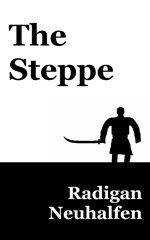
Radigan Neuhalfen is the author of the novel The Steppe and the blog The Crush of All Things.

Mongolia, Ulaanbaatar

Friday, October 08, 2010

Hip Hop in Mongolia

"Hi
"My name is Ronald and I am a college student in New York City. I came across your blog and I am writing to you because I am writing a paper for a scholarship competition that gives students a chance to travel to another country. I want to go to Mongolia and study what effects the Hip Hop culture has on the Mongolian political culture. I would like to know if you can give me some information Hip Hop artists in Mongolia. If not, do you know anybody who would know about this topic?
"Thank You"

=

Hi Ronald. Odko is active on the Internet:

http://www.myspace.com/akaodko
http://akaodko.hi5.com
http://www.facebook.com/pages/aka-Odko/118614728275

And this is a resource and support center for foreign scholars in Mongolia:

http://www.mongoliacenter.org/

Good luck,
Radigan

Thursday, October 07, 2010

Mongolian Film Festival


"The Arts Council of Mongolia (ACM) is pleased to announce the inaugural East Meets West Film Forum and Festival to be held in UIaanbaatar, Mongolia from October 5 – 8, 2010.

"With support from the Asia-Europe Foundation and the Open Society Institute, ACM will bring together filmmakers and film industry professionals from Asia, Europe, Central Asia, the USA and Mongolia for this very special event, the first of its kind ever to be held in the country.

"The film industry in Mongolia is currently in a state of flux, and local filmmakers struggle to make an impact at an international level. As such, ACM identified a great need to bring support and recognition from the global filmmaking community to Mongolia.

"A panel of international guests has been invited to meet in Ulaanbaatar to share ideas, screen films and work with Mongolian filmmakers to further the local industry. East Meets West will consist of film screenings with post-viewing discussion and Q+A sessions, a day forum focused on the global film industry and workshops for up-and-coming Mongolian filmmakers."

Saturday, October 02, 2010

Influenza Pandemic, World War I, mass death is individual loss multiplied many times over, cosmic horror

"Elizabeth had fallen victim to the greatest cosmic prank of all time, the flu that had swept across the world in the spring and summer of 1918, as if the bloody abattoir in the trenches hadn't been evidence enough of humanity's divine disfavor. That's what Elizabeth had called it in the last letter he'd ever had from her: God's judgment on a world gone mad. Garner had given up on God by then: he'd packed away the Bible Elizabeth had pressed upon him after a week in the field hospital, knowing that its paltry lies could bring him no comfort in the face of such horror, and it hadn't. Not then, and not later, when he'd come home to face Elizabeth's mute and barren grave."

--Dale Bailey and Nathan Ballingrud, "The Crevasse," Lovecraft Unbound, 2009

Lovedrive


album cover
1979 German

"We just did not know it would be a problem in America, it was just sex and rock n roll. It is odd that in America that some of these covers were a problem because in the 80’s when we would tour here we always had boobs flashed to us at the front of the stage. Nowhere else in the world, just here."

--Klaus Meine, 2010

Friday, October 01, 2010

"enormous moral energy": Bataille on de Sade

"We know what men are with their particular circumstances and limitations. We know in advance that generally speaking they cannot fail to judge de Sade and his writings in the same way.

"Lack of understanding is in the order of things; it is that of mankind in general; it comes from their lack of strength and their feeling of being threatened.

"The criticisms that de Sade defied were well founded. He was not against the fool and the hypocrite as much as against the decent man, the normal man in all of us, so to speak. He was less concerned to convince than to challenge.

"Certain minds are fired by the thought of turning the most securely established values topsy-turvy. They are thus able to say gaily that the most subversive man who ever lived--the Marquis de Sade--was also the man who rendered the greatest service to humanity. Nothing to their mind be more certain; we shiver at the thought of death and pain (even the death and pain of other people), tragic or unspeakable events cut us to the quick, but that which inspires us with terror is like the sun, no less glorious if we turn our weak eyes away from its blaze.

"Like the sun at least in being intolerable to the naked eye, the figure of de Sade fascinated and terrified his contemporaries: was not the very idea that the monster was alive revolting? In our day and age, however, an apologist for his ideas is never taken seriously, and no one thinks them at all significant.... That would not matter if only de Sade's ideas did not lose their essential value: namely, that of being incompatible with the ideas of reasonable beings.

"De Sade asserted these unacceptable values in book after book. Life, he maintained, was the pursuit of pleasure, and the degree of pleasure was in direct ratio to the destruction of life. In other words, life reached its highest intensity in a monstrous denial of its own principle.

"Such a strange doctrine could obviously not be generally accepted, nor even generally propounded, unless it were glossed over, deprived of significance and reduced to a trivial piece of pyrotechnics. Obviously, if it were taken seriously, no society could accept it for a single instant. Indeed, those people who used to rate de Sade as a scoundrel responded better to his intentions than his admirers do in our own day: de Sade provokes indignation and protest, otherwise the paradox of pleasure would be nothing but a poetic fancy.

"In one way it is easier to be be receptive to de Sade's eroticism than to the religious demands of old. No-one today could deny that impulses connecting sexuality and the desire to hurt and to kill do exist. Hence the so-called sadistic instincts enable the ordinary man to account for certain acts of cruelty, while religious impulses are explained away as aberrations. By describing these instincts in masterly fashion then, de Sade has contributed to man's slow-growing awareness of himself--in philosophical terminology 'consciousness of self'; The expression 'sadistic', in universal use, is in itself clear proof of his contribution.

"The cruelty of de Sade's heroes should not be wholeheartedly abominated. It is a denial of the principles on which humanity is founded. We are bound to reject something that would end in the ruin of all our works. If instinct urges us to destroy the very thing we are building, we must condemn those instincts and defend ourselves from them. But there remains this question. Is our being ineluctably the negation as well as the affirmation of its own princple?

"One cannot fail to observe mankind's double nature throughout its career. There are two extremes. At one end, existence is basically orderly and decent. Work, concern for the children, kindness and honesty rule men's dealings with their fellows. At the other, violence rages pitilessly. In certain circumstances the same men practise pillage and arson, murder, violence and torture. Excess contrasts with reason.

"These extremes are called civilisation and barbarism. But the use of these words is misleading, for they imply that there are barbarians on the one hand and civilised men on the other.

"Common language will not express violence. It treats it as a guilty and importunate thing and disallows it by denying it any function or any excuse. If violence does occur, and occur it will, it is explained by a mistake somewhere, just as men of backward civilisations think that death can only happen if someone makes it by magic or otherwise. Violence in advanced societies and death in backward ones are not just given, like a storm or a flood; they can only be the result of something going wrong.

"But silence cannot do away with things that language cannot state. Violence is as stubbornly there just as much as death, and if language cheats to conceal universal annihilation, the placid work of time, language alone suffers, not time and not violence.

"Useless and dangerous violence cannot be abolished by irrational refusals to have any truck with it, any more than the irrational refusals to treat with death can eliminate that.

"The characters of de Sade's novels do not speak to man in general, as literature does even in the apparent discretion of the private journal. If they speak at all it is to someone of their own kind. De Sade's twisted libertines talk to each other. But they indulge in long speeches to show they are right.... What they insist upon is the overriding value of violence, excesses, crimes and tortures. In this way they fall short of the profound silence peculiar to violence, for violence never declares either its own existence or its right to exist; it simply exists.

"These disquisitions upon violence which keep interrupting the accounts of infamous cruelties that make up de Sade's books do not belong to the violent characters into whose mouths they are put. If such people had really lived, they would probably have lived in silence. These are de Sade's own ideas, and he uses this means to address other people.

"A paradox underlies his behaviour. De Sade speaks, but he is the mouthpiece of a silent life, of utter and inevitably speechless solitude. The solitary man for whom he speaks pays not the slightest heed to his fellows; in his loneliness he is a sovereign being, never called to account, never needing to justify himself to anyone.... All this calls for enormous moral energy, but such energy is in fact the point at issue.

"The solitary man proceeds step by step towards total negation: denial of other people first, and then by some monstrous logic denial of himself.

"It may be that de Sade's language is not common parlance, not addressed to all comers, but intended for those rare spirits capable of attaining to superhuman solitude in the very bosom of humanity.

"The man who speaks has nevertheless broken out of the solitude to which his condemnation of other people has condemned him.

"This monstrous anomaly hardly seems to correspond with the intentions of a man who, as he spoke, forgot the solitude to which he was condemning himself more unreservedly than other people had done, for he was betraying this solitude. Normal men, standing for common necessity, obviously could not understand him. His plea could not have any meaning, so that this enormous work taught solitude in solitude; a century and a half passed before its message was spread.

"Misunderstanding and revulsion from the generality of mankind are the only results worth of de Sade's ideas.

"De Sade's philosophy is not to be classed as madness. It is simply an excess, an excess to make our heads reel, but the excess of our own extravagance. We cannot ignore this without ignoring our own nature--and it is our nature that makes us tremble with fear.

"For the sake of greater satisfaction de Sade strove to infuse violence with the orderly calm of awareness.

"De Sade's writings, and this is their peculiar value, tend to bring men back to an awareness of something they have almost completely turned their backs on, looking for loop-holes and postponing the moment for coming to terms.

"They bring to man's thinking on the subject of violence the slow pace and the spirit of observation that characterise the conscious intelligence.

"In this way we reach a violence possessing the calmness of reason.

"The fact is that what de Sade was trying to bring to the surface of the conscious mind was precisely the thing that revolted the mind.

"It is only today we realise that without de Sade's cruelty we should never have penetrated with such ease the once inaccessible domain where the most painful truths lay hidden.

"And if today the average man has a profound insight into what transgression means for him, de Sade was the one who made ready the path. Now the average man knows that he must become aware of the things which repel him most violently--those things which repel us most violently are part of our own nature."


--Georges Bataille, "De Sade and the normal man" in L'Erotisme (Death and Sensuality: A Study of Eroticism and the Taboo), 1957